Inside the SF-400 Weighing Scale — A Smart Balance of Physics and Electronics
At first glance, a low-cost kitchen or weighing scale seems like a simple gadget — a plastic enclosure with a few buttons and an LED display.
But once you open it, you realize how much intelligent engineering hides behind its simplicity.
🔹 Display Magic: How Numbers Appear on a Paper-Like Screen
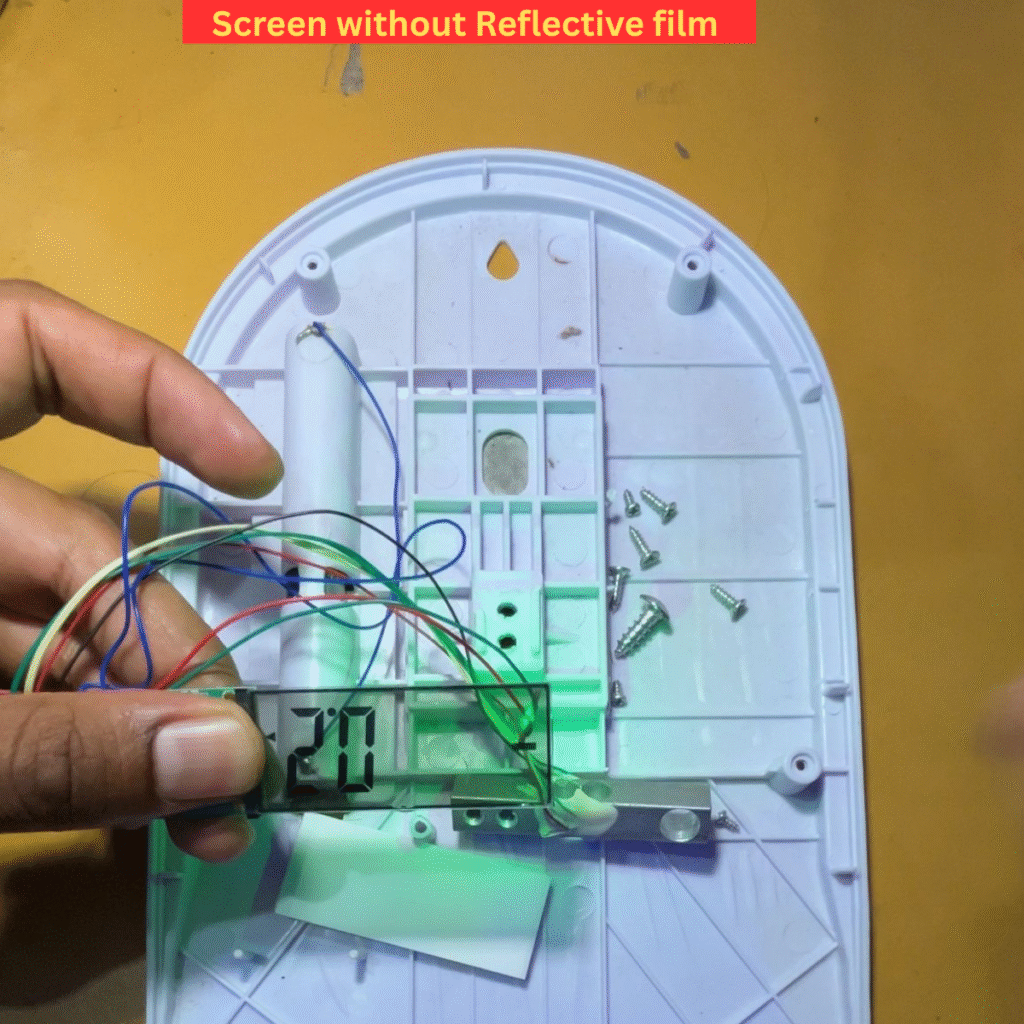
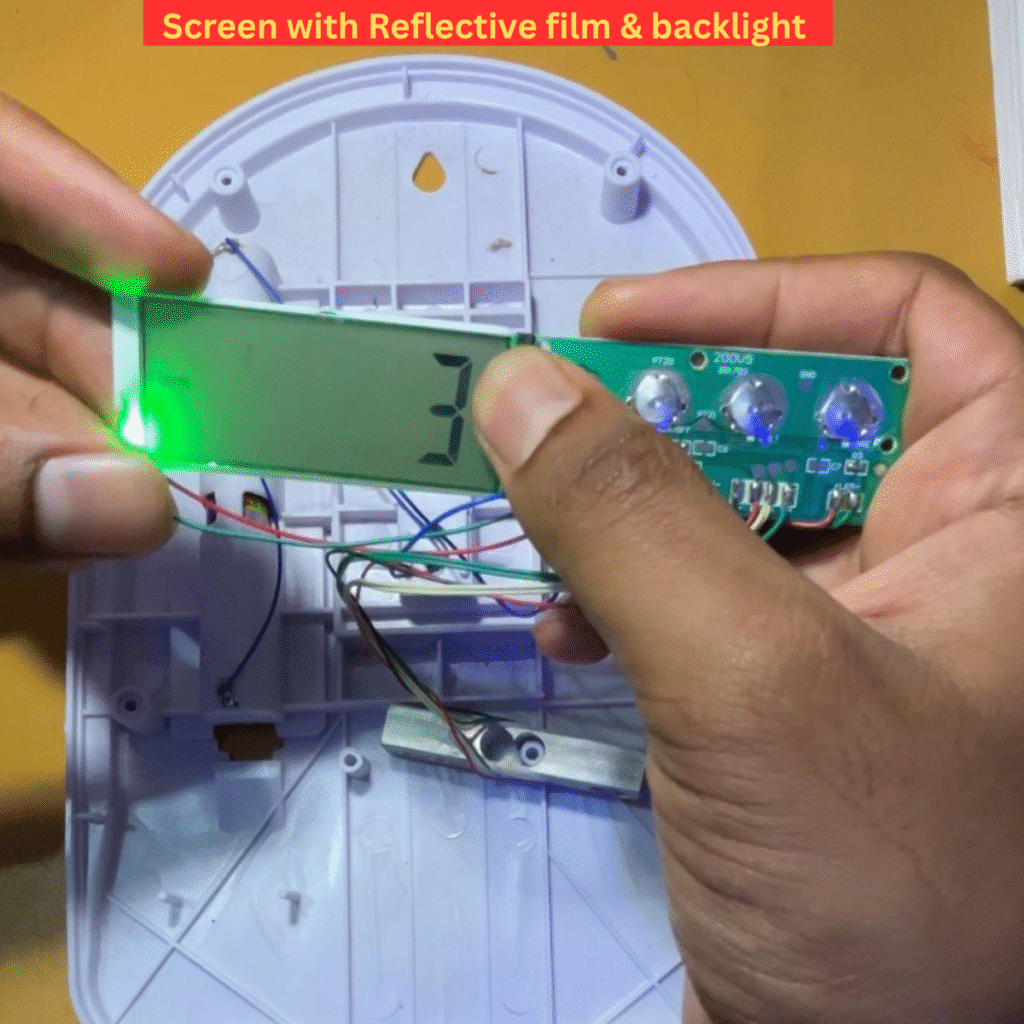
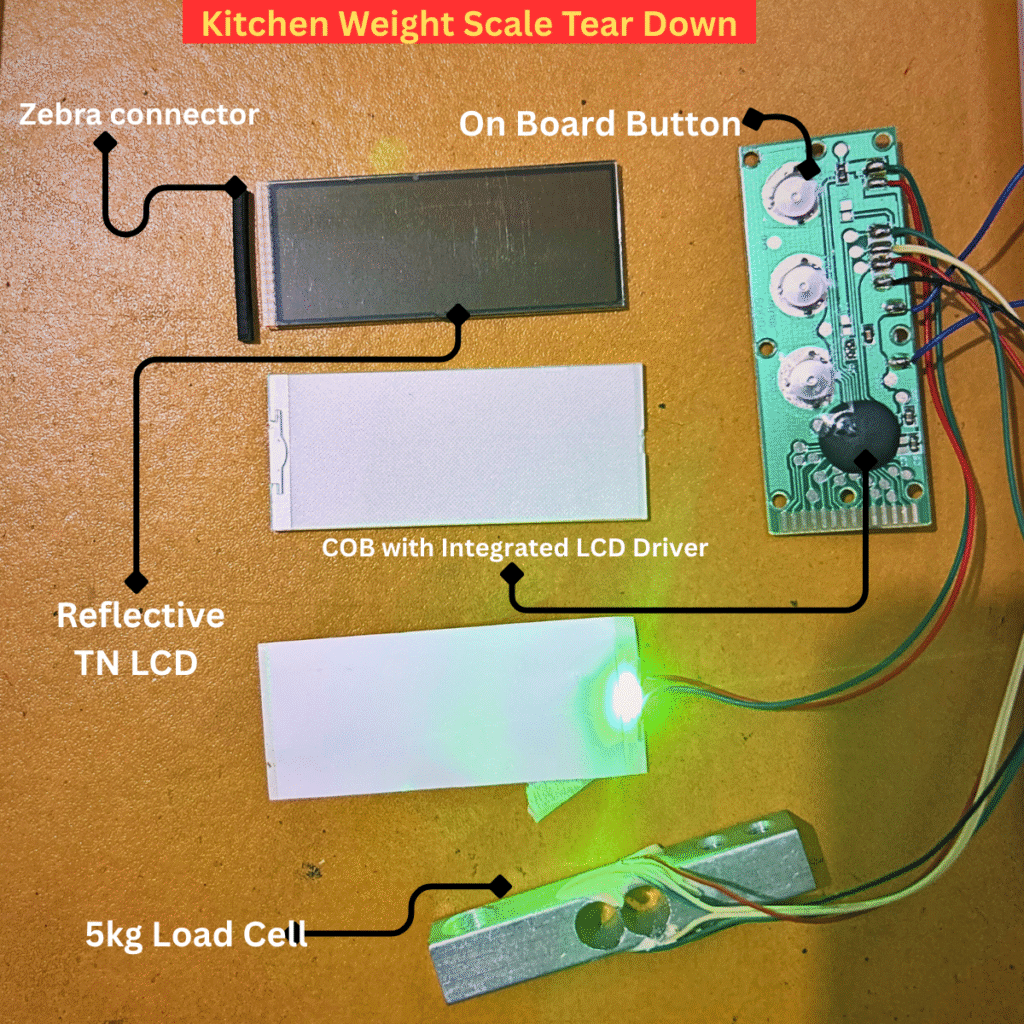
The display is not a typical 7-segment LED. It uses a zebra connector, a conductive rubber strip that transmits data signals from the PCB to the glass display — without any direct wiring.
Behind the glass lies a reflective film that amplifies LED brightness and visibility. It’s a perfect demonstration of how optics and electronics combine to reduce cost while maintaining clarity.
In short — what looks like “just a glowing number” is actually a precise alignment of physics and design.
🔹 Main Controller & Buttons
A single main PCB drives all the functions — On/Off, Tare, and Mode.
No extra circuitry, no unnecessary complexity. Every trace, every connection is optimized for cost and performance. It’s minimalistic design at its best.
🔹 Load Cell & Sensor Wiring
At the heart of the device lies a four-wire load cell, the true sensor that converts applied weight into electrical signals.
The wiring is simple — two for power and two for differential signal output — yet the precision it delivers is remarkable for its price point.
It’s a fine balance of mechanical strength and electrical sensitivity.
🔹 Embedded Intelligence — The COB (Chip-on-Board)
One of the most fascinating parts is the COB (Chip-on-Board) component.
This black epoxy blob hides a microchip that directly drives the LED display — often replacing a standalone microcontroller.
By integrating logic and LED driving circuitry in one, it cuts cost, saves space, and improves reliability.
This is pure embedded optimization — the kind of thinking that defines efficient consumer electronics.
🔹 Design & Cost Efficiency
When you consider what’s inside — a load cell, COB-based display driver, single PCB, battery holder, and durable ABS body — it’s incredible that this device sells for such a low price.
Every penny spent is backed by clever design choices and smart engineering trade-offs.
💡 Final Thoughts
The SF-400 teardown is a perfect reminder that innovation isn’t always about complexity — it’s about how effectively each component is used.
For students, makers, and embedded enthusiasts, such teardowns offer deep lessons in system design, cost optimization, and hardware intelligence.