Elementor #38
Inside an Industrial LoRaWAN Gateway: A Teardown That Explains Real-World Engineering
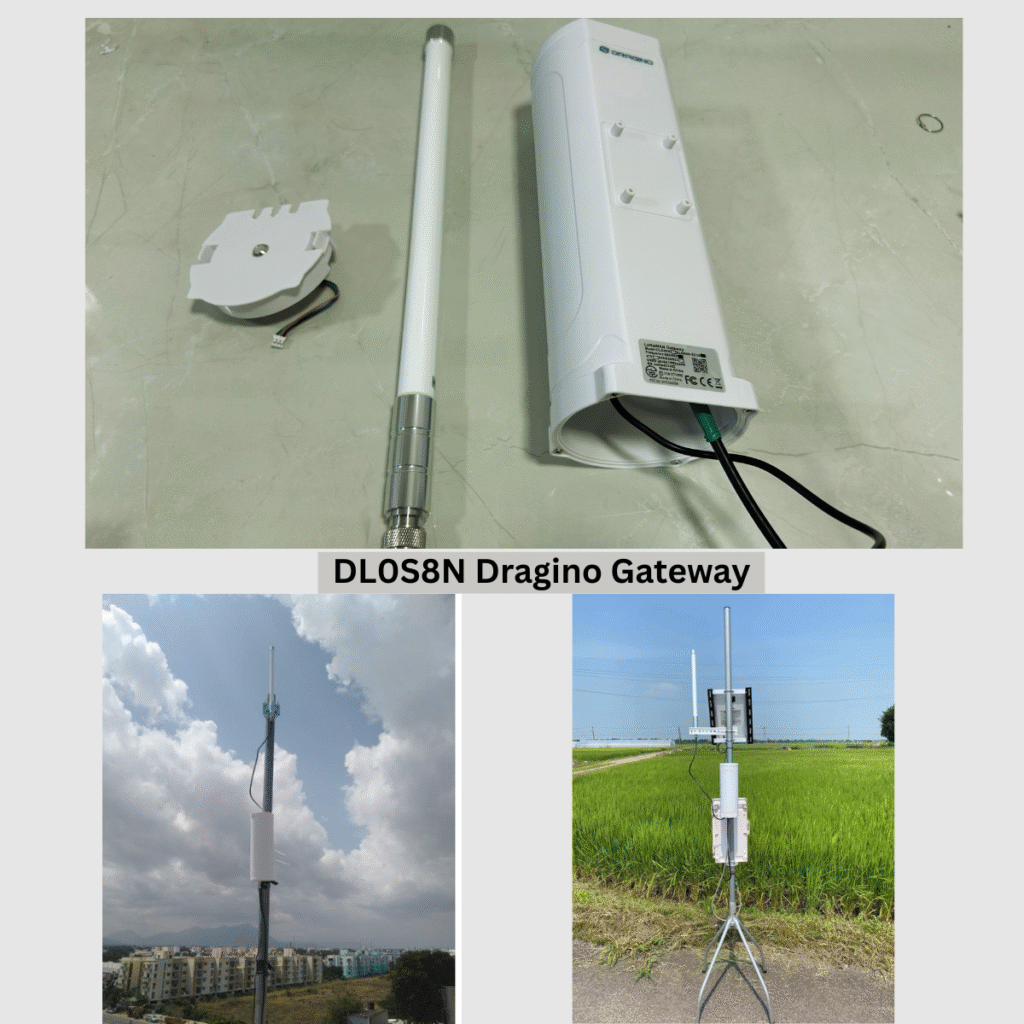
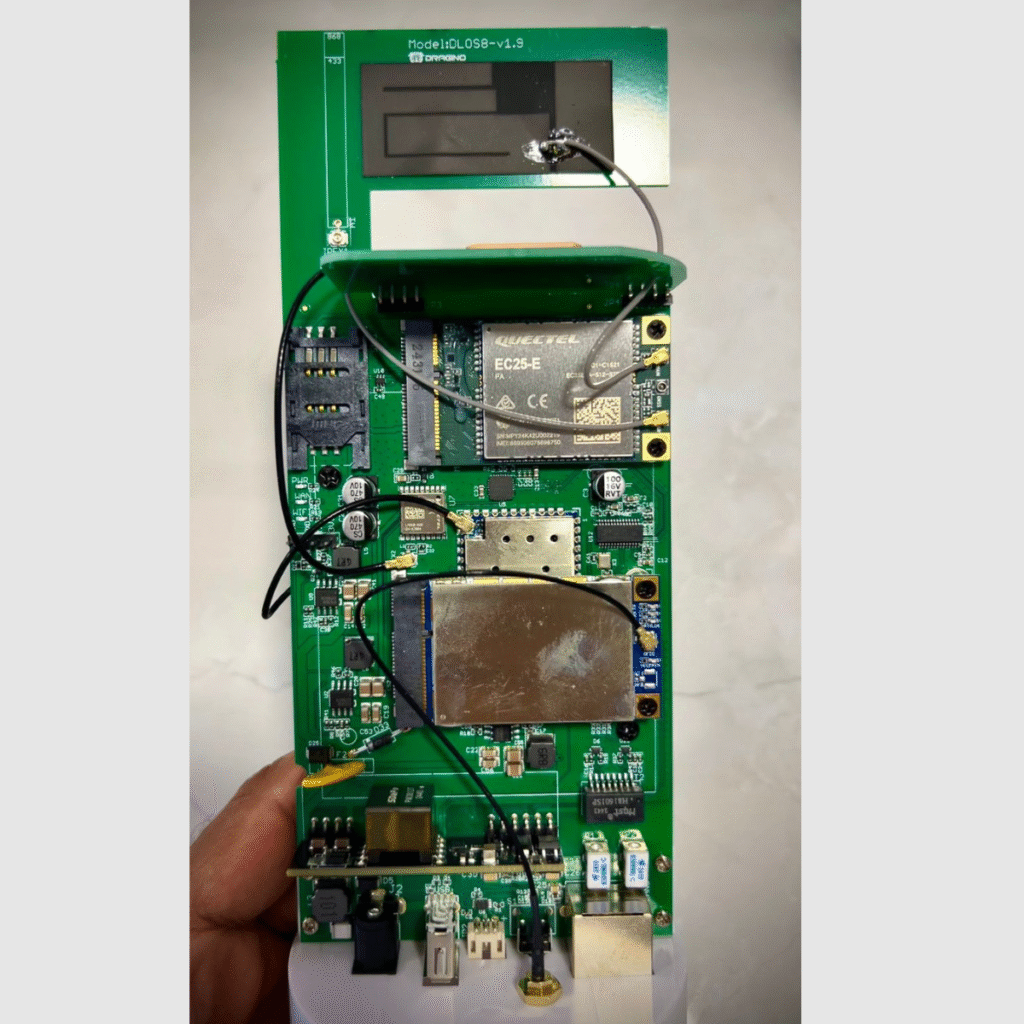
When we talk about industrial IoT hardware, the conversation often gets hijacked by specs—CPU speed, RAM, packet rate, or chipset names.
But after opening an outdoor Dragino LoRaWAN gateway, a more important truth becomes obvious:
Industrial hardware is not defined by specifications.
It is defined by how it survives the real world.
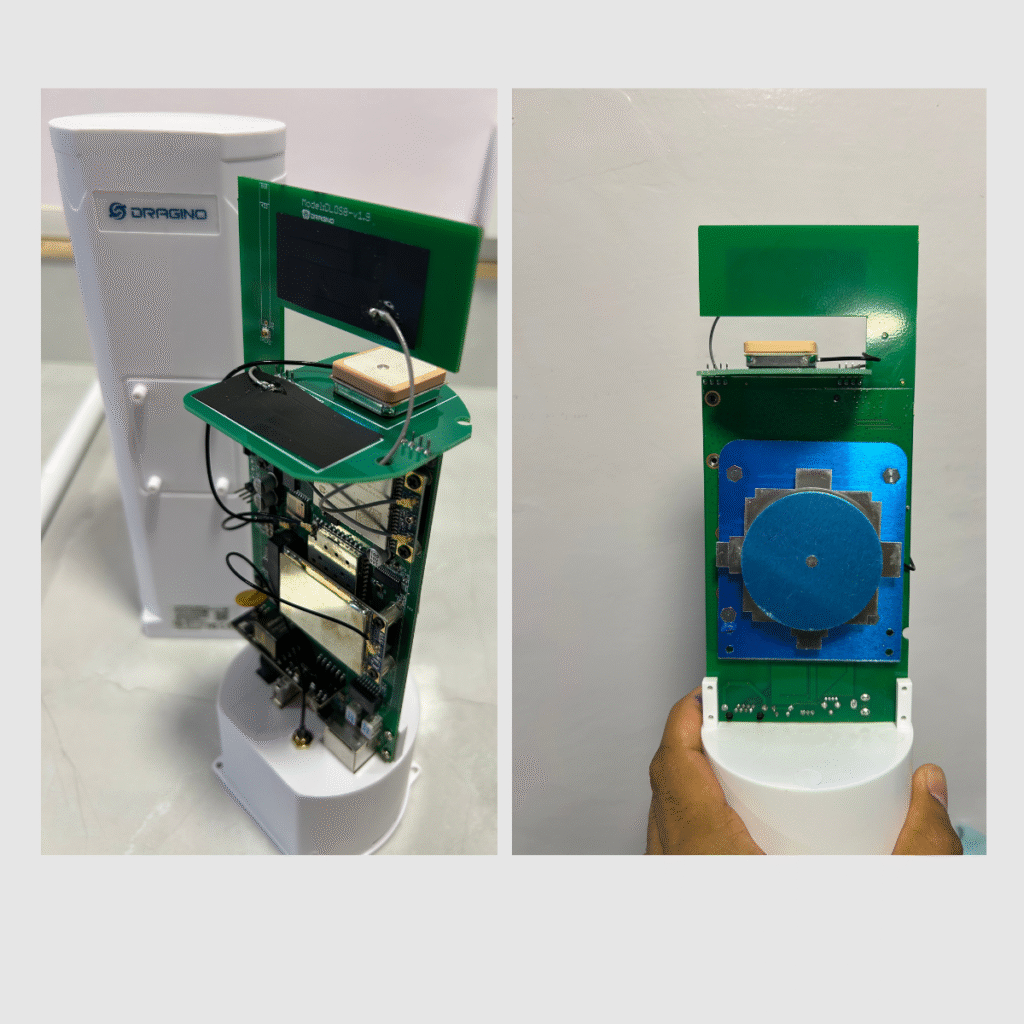
This teardown is not about admiration—it’s about understanding the design intent behind a gateway built to live outdoors, unattended, for years.
1. Power Architecture: Designed for Abuse, Not Ideal Conditions
The first thing that stands out is the power domain layout.
Unlike hobby boards that rely on a single regulator and assume clean input power, this gateway clearly anticipates electrical abuse:
Long PoE cables
Ground potential differences
Lightning-induced transients
Switching noise from nearby industrial equipment
Observations:
Multi-stage regulation instead of a single buck
Input protection components placed close to entry points
Clear separation between:
High-energy input stage
Intermediate regulation
Sensitive logic and RF rails
This is not redundancy for luxury—it’s for mean time between failures (MTBF).
In the field, dirty power is the norm, not the exception.
2. RF Section: Layout Discipline Over Marketing Power
The RF design philosophy here is very deliberate.
Instead of pushing higher transmit power, the design focuses on signal integrity and isolation.
What’s done right:
LoRa concentrator placed under dedicated RF shielding
RF traces kept short and impedance-controlled
Physical separation between:
Cellular RF
LoRa RF
Digital noise sources
This matters because self-interference is a silent killer in gateways.
Over time, poor RF isolation leads to:
Sensitivity degradation
Reduced uplink reliability
Inconsistent range across seasons
In real deployments, layout discipline beats raw TX power every time.
3. Cellular Integration: Serviceability First
The cellular modem (Quectel EC25 class) is not buried—it’s accessible and modular.
Key design signals:
Clearly routed antenna cables
Proper strain relief
Shielded modem placement
SIM access without disassembling the entire device
This tells us the gateway is expected to be:
Installed
Serviced
Possibly repaired or upgraded
Industrial products assume human interaction years later, not just day-one installation.
4. Thermal Design: Passive, Predictable, Reliable
There is no fan, and that’s intentional.
Fans fail. Filters clog. Bearings wear out.
Instead, the design relies on:
PCB mechanically coupled to the enclosure
Metal shields acting as heat spreaders
Large copper pours under high-dissipation areas
Why this matters:
Outdoor gateways face:
High summer temperatures
Direct sun exposure
Zero airflow environments
By using the enclosure as a thermal mass, the design ensures:
Stable component temperatures
Reduced thermal cycling stress
Longer capacitor and regulator lifespan
This is thermal engineering done quietly—and correctly.
5. Modular Architecture: Fault Isolation by Design
This gateway is not a monolithic board doing everything.
You can clearly identify:
A networking processor section
A dedicated LoRa concentrator
A separate RF front-end
Isolated power domains
Benefits:
Easier debugging
Predictable failure modes
Better EMI containment
Simplified certification impact
When something fails in the field, knowing where to look matters more than raw performance.
6. Outdoor Design Is Not Just the Enclosure
Industrial outdoor readiness is not just an IP-rated box.
From the teardown perspective, you can see:
Sealed RF connectors
Cable strain relief
Proper connector orientation to avoid water ingress
Thoughtful cable routing to avoid fatigue
This shows a mindset where:
Weather is a design requirement, not an afterthought.
Rain, dust, insects, vibration—all are assumed, not ignored.
7. Local Diagnostics: Because the Cloud Is Not Always There
One of the most overlooked aspects of industrial design is field diagnostics.
This gateway includes:
Clear LED indicators for:
Power
Network
LoRa activity
Physical reset / recovery access
Local configuration via IP interface
Why this matters:
Technicians may be on-site without internet
Debugging over phone calls needs visual cues
Downtime costs money
Industrial devices don’t assume perfect connectivity—they assume partial failure scenarios.
8. Design Philosophy Difference: Hobby vs Industrial
| Hobby Board | Industrial Gateway |
|---|---|
| Works on clean bench power | Survives dirty field power |
| Single regulator | Multi-stage protection |
| Minimal RF isolation | Shielded & separated RF |
| Performance-first | Reliability-first |
| Replace on failure | Service & recover |
| Demo lifespan | Multi-year deployment |
This teardown clearly falls in the right-hand column.
Final Takeaway
An industrial LoRaWAN gateway isn’t impressive because of its datasheet.
It’s impressive because:
It can run unattended for years
It degrades gracefully instead of failing catastrophically
It can be debugged and serviced in the field
It respects physics, environment, and human limitations
Teardowns like this remind us that real product engineering is multidisciplinary:
Electronics
RF
Thermal
Mechanical
UX
Maintenance strategy
Firmware alone doesn’t make a product industrial.